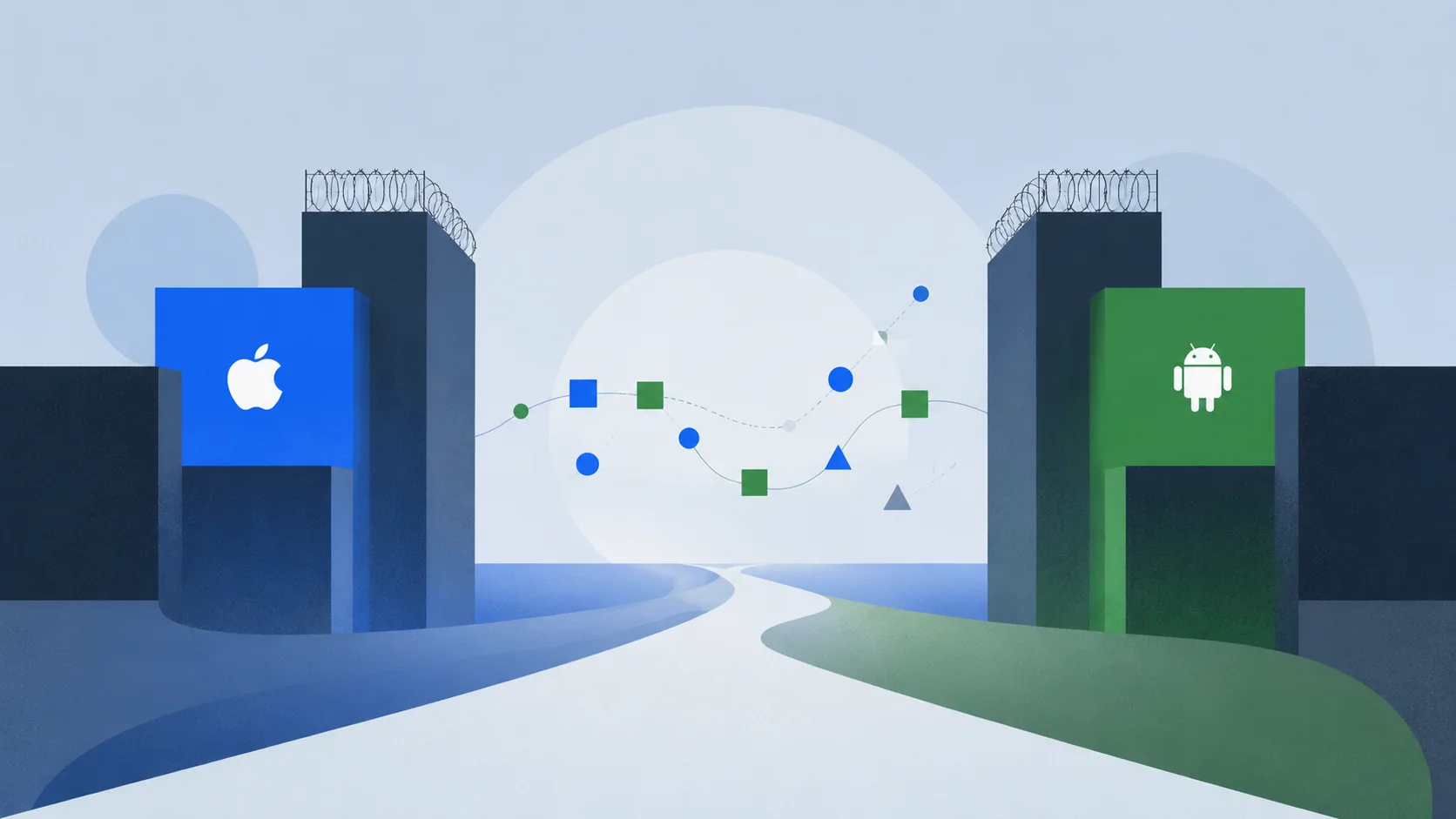
No Android app. No iOS app. Maybe in the future we are not even going to need these system-specific walls standing between people and software anymore.
Developers are not tired. They are tied. Tied into infrastructures built by corporations that are slowly trying to own the very roads software moves through. And somehow we all accepted that this is just how things should work.
But maybe the direction is already changing.
We only needed the web in the first place.
Of course operating systems matter. Android matters. Apple matters. Microsoft matters. I am not denying that. But why should developers and businesses continue carrying the cost of maintaining separate realities for every platform when the browser itself is evolving into something much bigger?
The Cost of Platform-Specific Development
Apple charges recurring fees just to keep apps on the App Store. Then takes cuts from purchases happening inside the app. I am not even saying it is unfair. Platforms built ecosystems and they monetize them. Fine.
Same with the Play Store too, but at least Google managed not to turn simply publishing an app into a recurring subscription developers have to keep paying forever.
But maybe businesses need to realize something simple now: a good web application is enough for a huge percentage of products.
Not everything needs to become three separate codebases stitched together just to exist.
Yes, cross-platform tools exist. React Native, Flutter and everything else. But honestly? I still lean toward the web.
Because the web has a kind of potential people still underestimate.
Why the Web Is Becoming Enough
The gap between a “website” and an “app” is collapsing right in front of us.
Web apps already do things that once felt impossible without native software, offline support, push notifications, realtime syncing, payments, installable experiences, local storage, camera access, background processes. Technologies like PWAs, WebAssembly, Service Workers and WebGPU are pushing browsers into territories nobody imagined years ago.
And users honestly do not care anymore whether something is “truly native.” They care if it feels smooth.
That is why products like Figma, Notion, Canva or Linear feel completely normal to use despite relying heavily on the web.
Even native apps themselves are increasingly built using shared web technologies underneath.
Browsers are no longer Simple
The browser is no longer just a place to open websites. It is slowly becoming a universal runtime layer. Almost like a lightweight operating system sitting above the real one.
Think about it.
Modern browsers now manage storage, permissions, notifications, GPU acceleration, AI inference, file systems, audio pipelines, background tasks, identity and syncing. Those are operating system responsibilities.
And once applications become cloud-synced, realtime and account-based, the underlying OS starts mattering less and less.
Someone on Android, iPhone, Linux or Windows can instantly access the same experience if it lives on the web.
That universality is powerful.
Weakening of the App Store Model
And honestly, this weakens the whole idea of app-store dependency too. Because on the web, developers can deploy instantly, update instantly, reach everyone through a URL and avoid waiting for gatekeepers to approve every move.
You can already feel where this is going: browser-based IDEs, cloud gaming, AI copilots, mini apps, installable web apps, collaborative tools living entirely online.
Ten years ago people would laugh if you said professional design software or advanced editing suites would run smoothly inside a browser.
Now it feels normal.
Maybe this is the time developers rethink things too..
Maybe owning and running our own websites is healthier than permanently building under the feet of systems designed to keep us dependent on them.